
Three Common Myths About Flooding (and the Facts Behind Them)
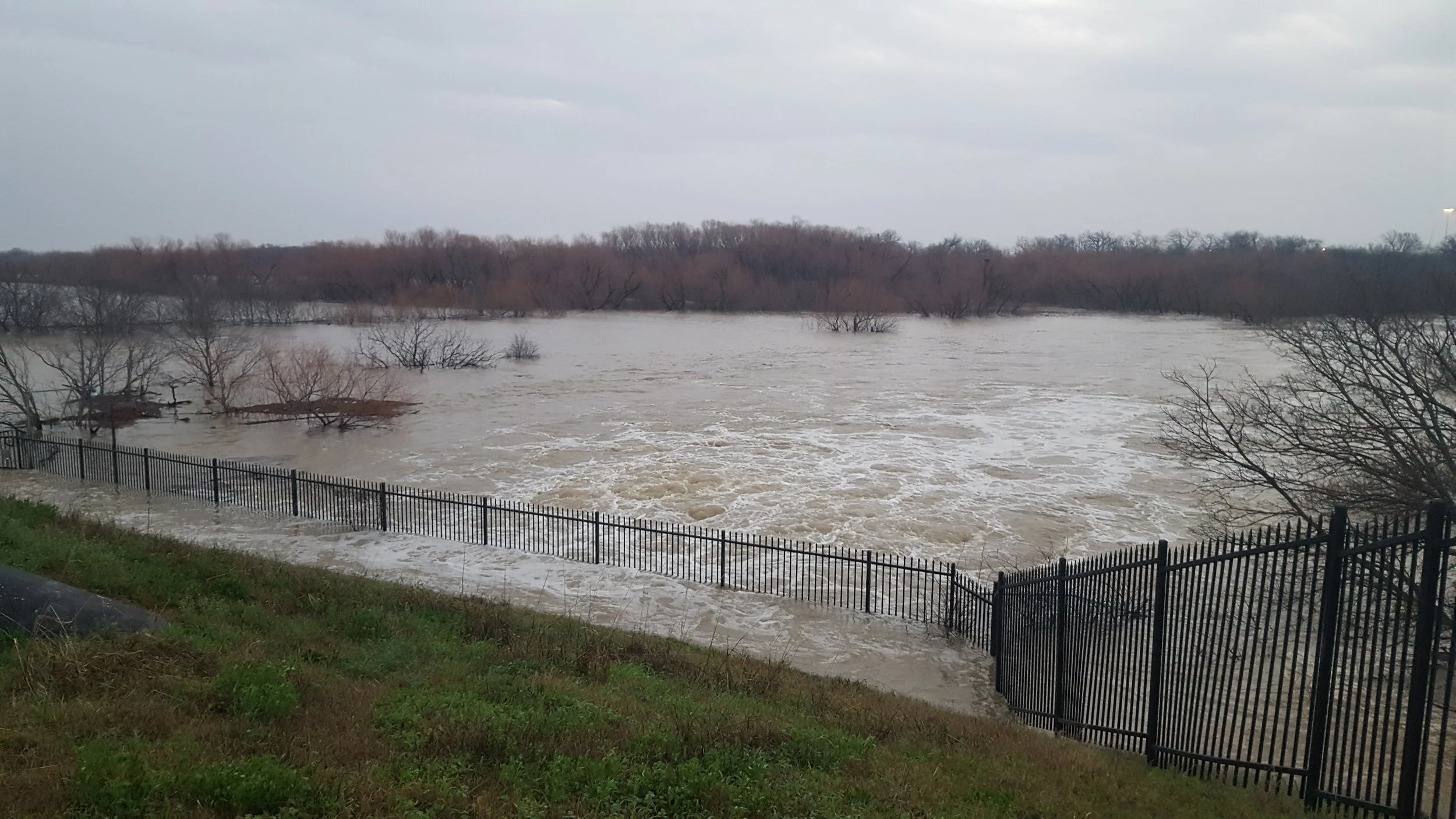
A flooded waterway in Valley Ranch, Texas.
When heavy rain hits North Texas, flooding often becomes a topic of conversation. However, flood risk is influenced by more than just the weather forecast.
Let’s take a look at three common myths about flooding and the facts behind them.
Myth #1: Flooding Only Happens Near Rivers and Lakes
Fact: Flooding can occur near and far from major bodies of water.
Heavy rainfall can cause water to collect in streets, parking lots, storm drains and other low-lying areas. Understanding where water flows naturally helps engineers identify potential problem areas and build flood control systems to help protect nearby homes, businesses and roadways.
Myth #2: A Drought Means Flooding Is NEVER a Concern
Fact: Drought and flood risk can coexist.
North Texas is home to intense, dry summers. However, dry conditions don’t eliminate flood risk. In fact, after long periods without rain, the ground becomes less effective at absorbing water because of how compact the soil is. When heavy rain eventually arrives, water can build up more quickly, increase runoff and contribute to flooding.
Myth #3: A Little Littering Can’t Hurt Anything
Fact: Even small amounts of litter can create problems for waterways and drainage systems.
Rain can carry trash from streets and sidewalks into storm drains and canals, where it can accumulate over time. Properly disposing of litter helps keep waterways clear, allows stormwater to move more efficiently and supports the overall health of the flood control system.
Looking Beyond the Myths
Flood risk isn't always as straightforward as it seems, and many factors can influence when and where flooding occurs. Our team of experts stays on top of it all, helping ensure Valley Ranch remains protected from flooding year-round.
To stay up-to-date on IFCD 3’s latest activities and learn more about our projects, follow us on Facebook.